2026.1.5 Article Post with Images

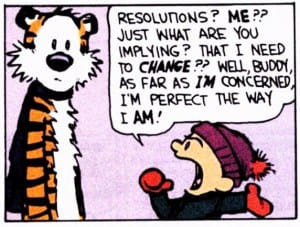
The Trouble With New Year’s Resolutions Isn’t That We Fail. It’s Why We Make Them.
By Jan. 12, the evidence is usually clear. Gym parking lots thin out. Dry January quietly bends. The journal bought with the best of intentions lies unopened, its spine unbroken, its promise deferred.
New Year’s resolutions, it turns out, are remarkably durable for something so frequently abandoned. Every December, millions of Americans participate in the same ritual: taking stock, drawing a line between who they were and who they hope to be, and declaring that the calendar itself might help enforce the difference.
The practice dates back thousands of years. Ancient Babylonians made promises to their gods at the start of the year. Romans pledged good conduct to Janus, the two-faced god of beginnings. Today’s resolutions are more secular but no less aspirational, focused on health, money, productivity, and the vague but persistent idea of self-improvement.
What has changed is the pressure.
“Resolutions used to be private,” said Katy Milkman, a behavioral scientist at the University of Pennsylvania who studies motivation and goal-setting. “Now they’re performative. They exist alongside apps, trackers, and social accountability in ways that can make failure feel public.”
In an era shaped by optimization culture, resolutions often resemble corporate metrics rather than personal intentions. People vow to lose a specific number of pounds, read a certain number of books, or wake up at 5 a.m., as if the self were a quarterly report waiting to be improved.
The problem, psychologists say, is not that people lack discipline, but that resolutions tend to be too large, too vague, or rooted in dissatisfaction rather than curiosity. “When goals are framed around fixing what’s wrong with you,” Ms. Milkman said, “they’re harder to sustain.”
This may explain why so many resolutions collapse under the weight of January itself. The month is dark, cold, and rarely forgiving. Bills arrive. Work resumes. The emotional clarity of late December gives way to routine.
And yet, people keep trying.

Part of the appeal lies in what researchers call the “fresh start effect,” the idea that temporal landmarks—birthdays, Mondays, new years—create psychological distance from past failures. The calendar offers absolution. Whatever happened before feels sealed off, archived.
But there is also something deeply human in the impulse to mark time with intention. Resolutions persist not because they work perfectly, but because they offer a moment of authorship. They allow people to narrate their lives as stories still in progress.
Recently, there has been a quiet shift in how resolutions are framed. Instead of sweeping declarations, some people are opting for gentler language: themes rather than goals, habits rather than outcomes, values rather than benchmarks. “More rest.” “More honesty.” “Less urgency.”
On social media, the trend toward “non-resolutions” has gained traction, particularly among younger adults wary of burnout. The emphasis is less on transformation and more on alignment—living a little closer to what already matters.
This approach does not guarantee success, but it may offer something more durable: compassion. Studies suggest that people who treat lapses as part of the process, rather than as evidence of failure, are more likely to continue.
By February, most resolutions will be revised, postponed, or quietly forgotten. This is often framed as a moral shortcoming, a lack of willpower. But perhaps it is something else: evidence that people are negotiating between who they are and who they wish to become, in real time, under imperfect conditions.
The resolution, after all, is not the point. The pause is.
Each January offers a brief, collective moment to ask difficult questions: What do I want more of? What can I let go of? What might change if I tried again?
Even unanswered, those questions have a way of lingering—long after the calendar turns, and long after the gym crowds thin.