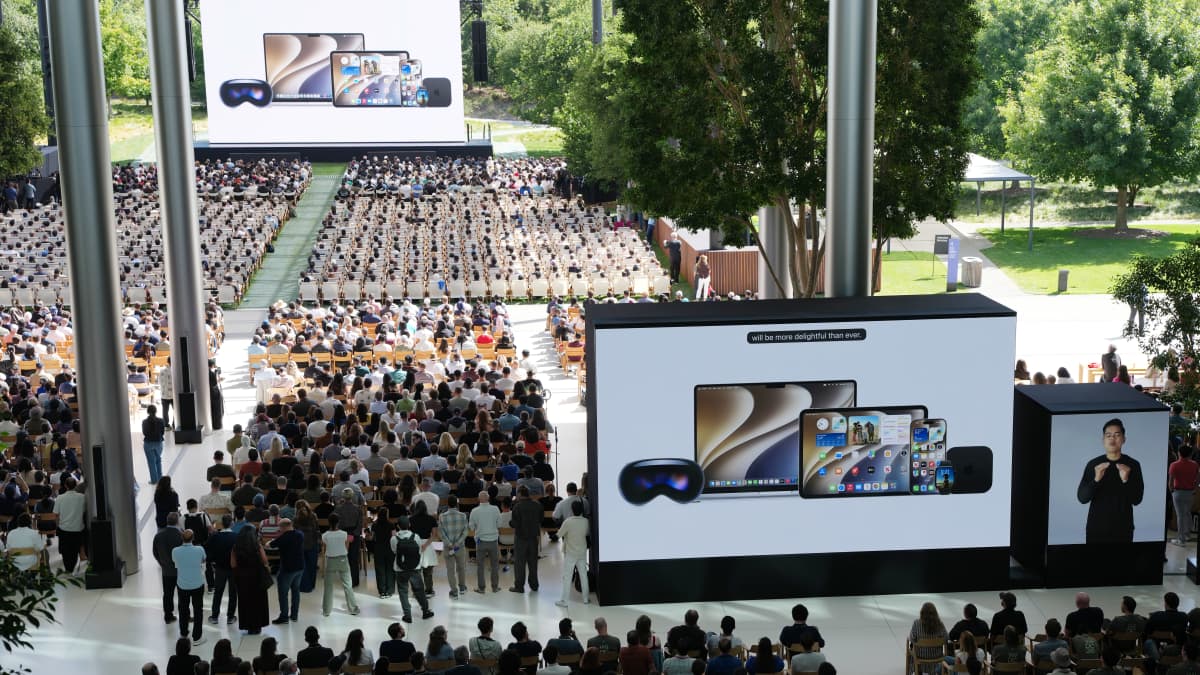
Apple’s WWDC Keynote Recap
Signaling a More Practical AI Era
Apple’s latest WWDC keynote was less about spectacle and more about correction. After years of pressure to prove its artificial intelligence strategy, Apple used the event to show a more mature version of its software roadmap: smarter, more personal, and more deeply integrated across the devices people already use every day.
The centerpiece was Siri. Long criticized for falling behind newer AI assistants, Siri is being rebuilt into a more capable, conversational system designed to understand context, work across apps, and help users complete everyday tasks more naturally. Rather than positioning AI as a separate product, Apple is weaving it into the operating system itself.
That approach fits Apple’s larger message: AI should feel useful, private, and invisible when it works well.

iOS 27 Takes the Spotlight
For iPhone users, iOS 27 represents the biggest part of the keynote. The update expands Apple Intelligence, improves Siri, and refines the Liquid Glass design language introduced in the previous software cycle.
Liquid Glass remains part of Apple’s visual identity, but the company appears to be responding to criticism around readability and usability. The new software adds more control over how transparent the interface feels, giving users a better balance between style and clarity.
Apple also emphasized speed, polish, and quality-of-life improvements. Instead of chasing flashy features alone, iOS 27 looks designed to make the iPhone feel more responsive, more helpful, and easier to use.
Siri Gets Its Real AI Moment
The biggest question heading into WWDC was simple: could Apple make Siri relevant again?
The answer, at least from the keynote, is that Apple is finally treating Siri as more than a voice command tool. The new Siri is designed to understand more complex requests, draw from personal context, and help users move between apps without manually managing every step.
That could make Siri useful for tasks like planning, writing, searching, navigating, and finding information across photos, messages, notes, and other Apple apps.
The real test will come when users can try it themselves. Apple has promised smarter assistants before, but this version appears to be the company’s clearest attempt yet to turn Siri into a true AI companion.
macOS 27 Brings AI to the Mac
Apple also introduced macOS 27, named “Golden Gate,” with a focus on smarter search, deeper Siri integration, and better systemwide intelligence.
On the Mac, Apple’s AI strategy may be especially useful. A smarter Siri and improved search experience could help users find documents, compare files, summarize information, and automate tasks more quickly.
For professionals, students, and creators, that matters. The Mac is where many users do their most complex work, and Apple seems to be positioning macOS as a place where AI can reduce friction without overwhelming the workflow.
Apple Focuses on Families and Safety
Another major theme was child safety. Apple announced expanded parental controls, redesigned Screen Time tools, and stronger protections around communication and content access.
These updates show Apple trying to make its devices easier for families to manage. Parents will have more control over who children can contact, which websites they can access, and how much time they spend in different types of apps.
It is not the flashiest part of WWDC, but it may be one of the most important for everyday users.
visionOS Continues to Mature
Apple also used the keynote to show continued investment in visionOS. The latest version adds deeper Siri integration, improved visual intelligence, and refinements aimed at making Vision Pro feel more useful and natural.
While Vision Pro remains a niche product, Apple is still building the software foundation for spatial computing. WWDC made clear that the company sees visionOS as part of its long-term platform strategy, not a one-off experiment.
The Bigger Picture
This WWDC keynote was not about a single shocking product reveal. It was about Apple trying to bring its software ecosystem into the AI era without abandoning what makes Apple products feel familiar.
The message was clear: AI is coming to the iPhone, Mac, iPad, Apple Watch, and Vision Pro, but Apple wants it to feel integrated rather than disruptive.
Whether the new Siri and Apple Intelligence features live up to that promise remains to be seen. But this keynote marked an important shift. Apple is no longer just previewing the idea of intelligent devices. It is now trying to prove that intelligence can become a normal, useful part of everyday computing.