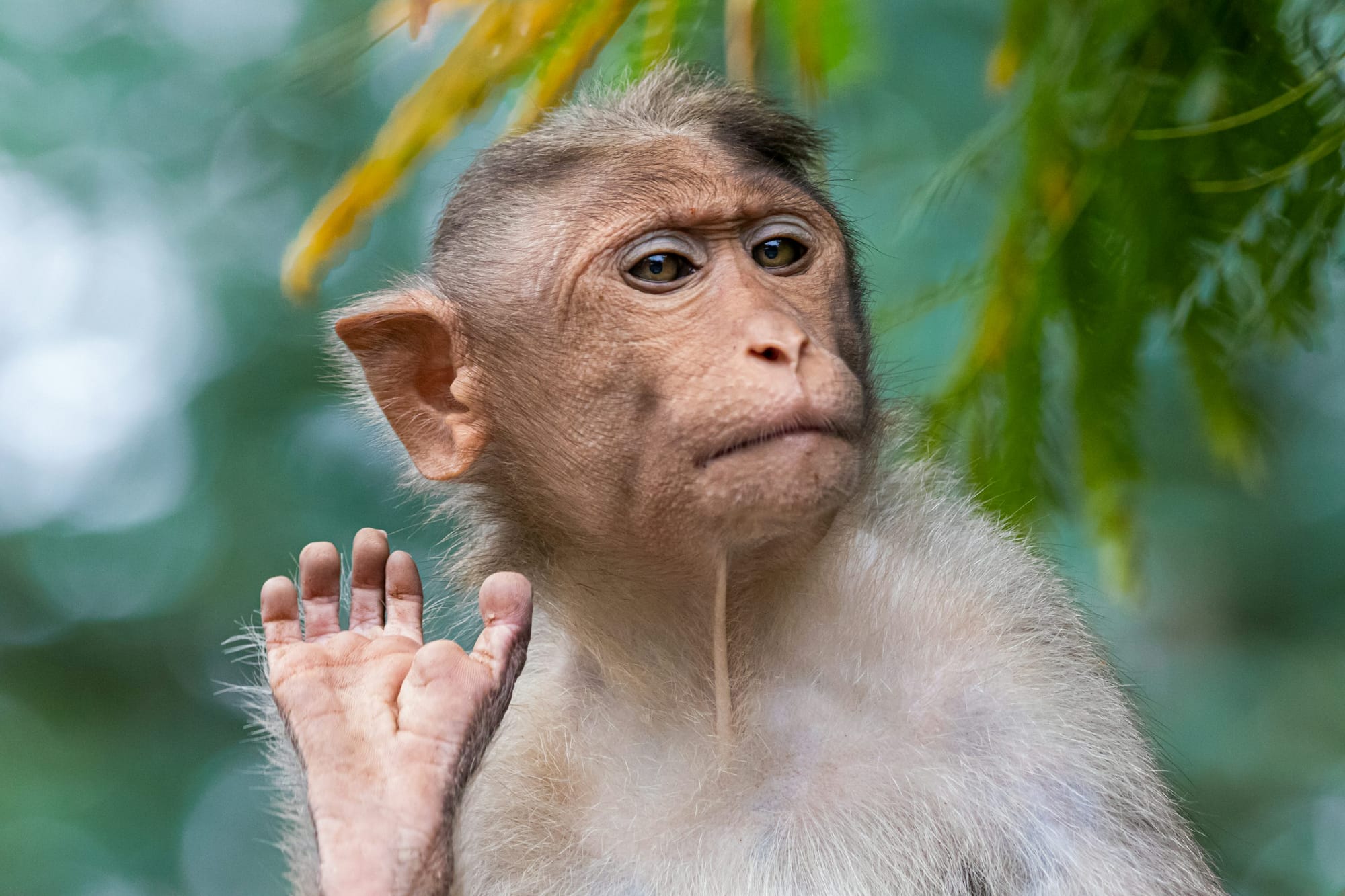
Monkeys: The Internet’s Favorite Little Chaos Geniuses (and Why They’re Actually Amazing)
If you’ve ever watched a monkey steal someone’s snack, ride a dog like a tiny cowboy, or stare directly into a camera like it pays rent, you already know: monkeys are icons. But beyond the meme energy, they’re also some of the most fascinating animals on the planet—smart, social, and a little too relatable.
Let’s hang out in monkey world for a bit.
What Even Is a Monkey?
Monkeys are primates, which makes them close cousins of apes and humans. A handy quick rule people often use is that monkeys usually have tails, while apes don’t. Within the monkey family, scientists generally talk about two major branches. One is Old World monkeys, found across Africa and Asia. These include animals like baboons, macaques, and langurs, and they tend to be sturdier overall, with narrower noses, and many of them spend a good chunk of life on the ground as well as in trees. The other branch is New World monkeys, which live in Central and South America. Capuchins, howler monkeys, and spider monkeys fall into this group. They’re often more tree-focused, with wider noses, and some species have prehensile tails—able to grip branches almost like an extra hand.
Monkeys are a lot smarter than their “chaos gremlin” reputation suggests. What looks like mischief is often problem-solving in real time. Capuchins, for example, will use rocks to crack nuts or shellfish, and some macaques have learned to rinse sandy food in water before eating it. These aren’t isolated tricks either. Monkeys learn from each other, remember what works, and pass clever behaviors through the troop. A big reason their brains are so sharp is that monkey life is intensely social, and surviving in a complicated group requires real mental horsepower.
Their communication is far more precise than people assume. Monkeys don’t just make noise; they share information. Many species have different alarm calls for different predators, meaning the troop can tell whether they’re dealing with a snake, a big cat, or a bird of prey, and respond appropriately. Alongside vocal calls, they use facial expressions, body posture, and even subtle gestures to signal mood or intent. In a forest where danger can appear in seconds, that kind of clarity can make the difference between life and death.

Monkeys are forest architects
Monkeys also do important ecological work that most people never notice. Many species eat fruit and travel long distances every day, spreading seeds through their droppings as they go. That makes them essential seed dispersers for countless tree species. In a very real way, monkeys help shape what forests look like over time. Without them, some trees would struggle to reproduce, and entire habitats could slowly change.
Monkey eating some food.
Why we can’t stop watching them
All of this is part of why monkeys fascinate us so much. They’re playful, clever, dramatic, and curious, and they move through life with a mix of strategy and improvisation that feels almost human. We laugh at them because they’re funny, but we’re also drawn to them because they’re a mirror—loud, social, inventive little survivors making a life in a complex world.